ServicesSiding
Siding Repair and Replacement in Rocky Mount
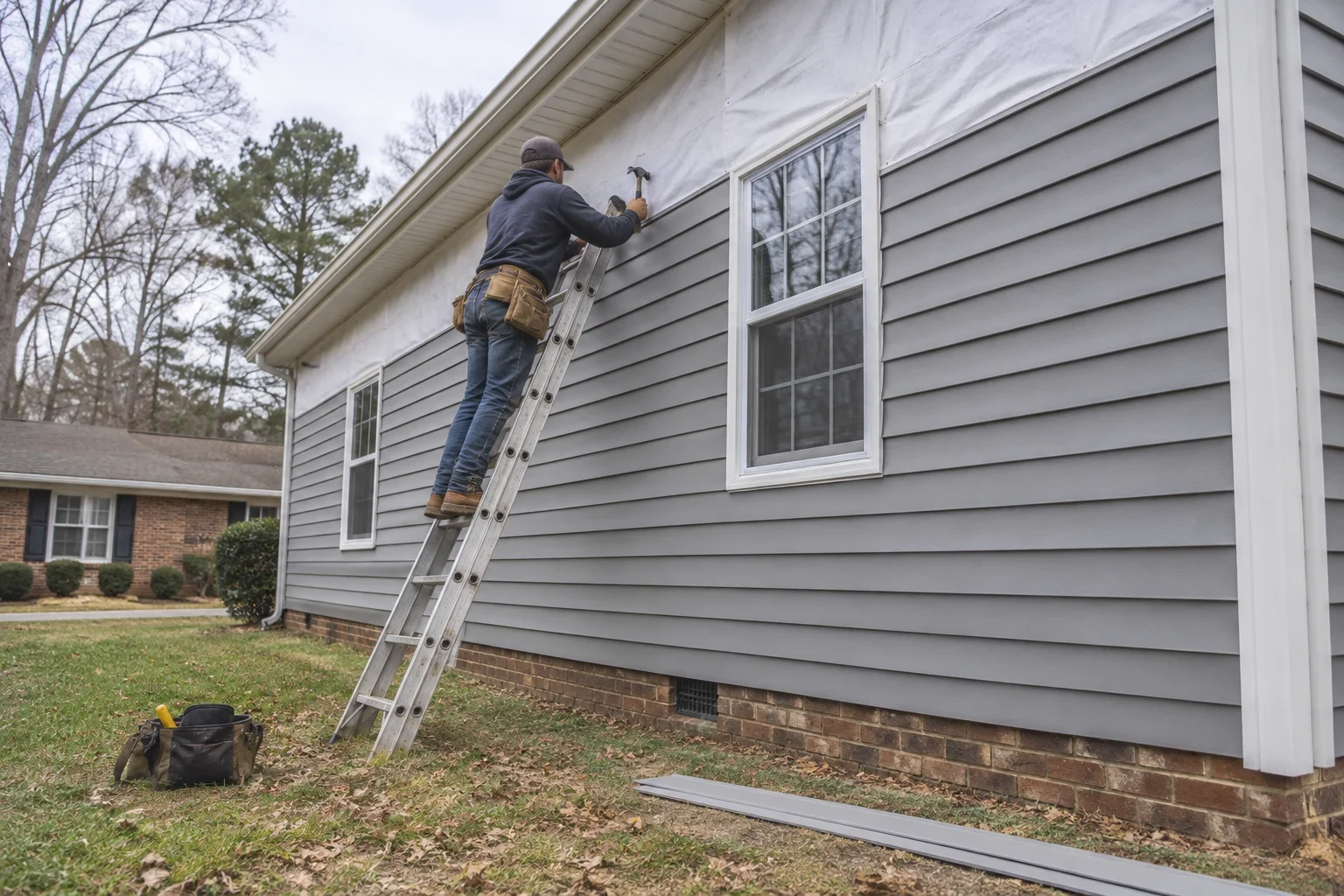
Cracked, loose or buckled siding usually traces back to a few panels or a missing flashing detail, not a failed exterior. We find the cause, show you photos of what we found, and recommend new siding on a whole wall only when repairs would not hold up.
Siding Work That Starts With the Cause
Siding is the outer layer of a two-part wall system. The panels turn away the bulk of the rain, and the house wrap and flashing underneath catch the water that slips by. When a panel cracks or pulls loose, what matters is whether moisture has reached the sheathing. If the wall underneath is dry and solid, swapping out the damaged courses is the sensible fix. If the OSB or plywood has gone soft, patching the surface only hides a problem that keeps growing.
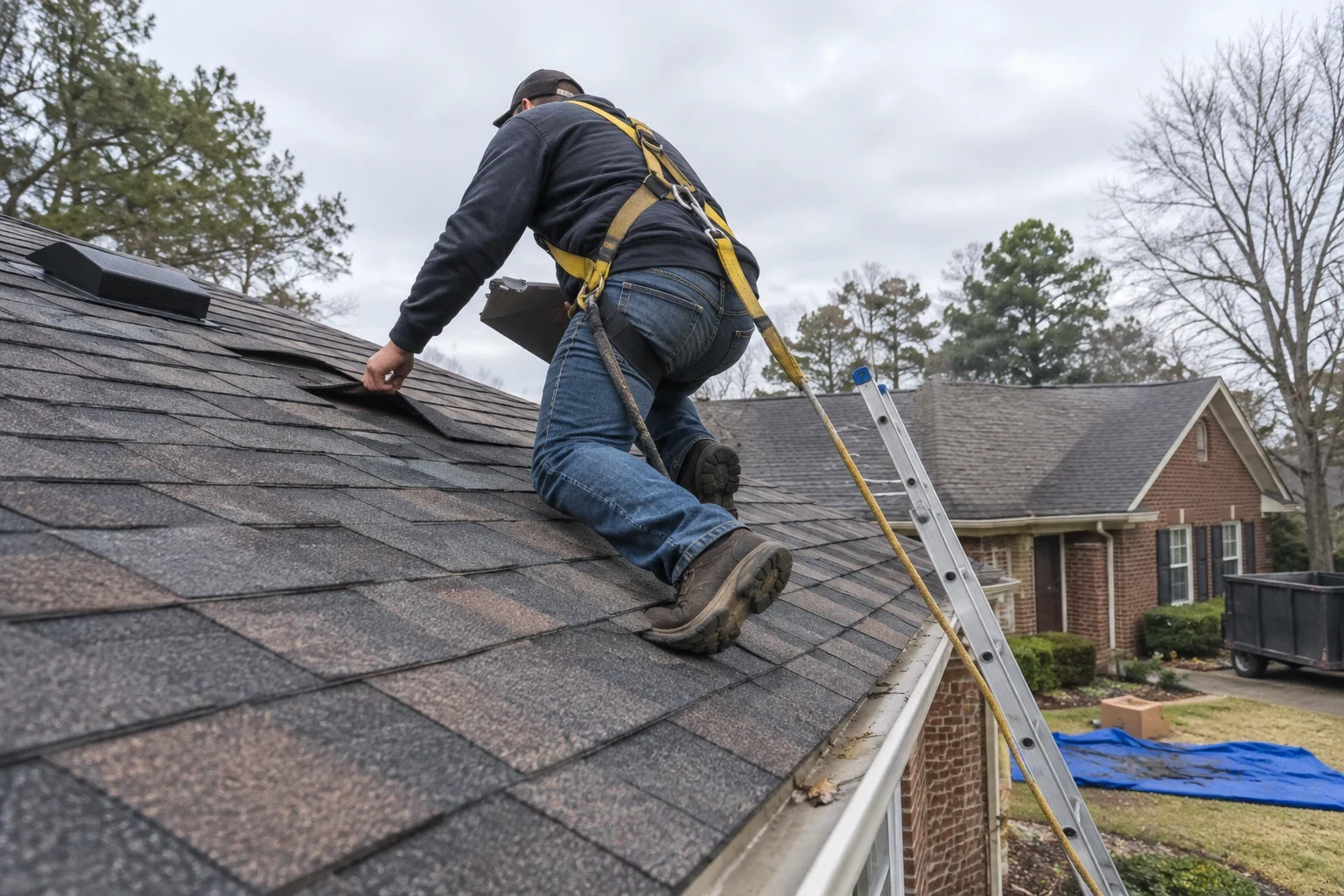
Many siding failures start at the roof. A missing kick-out flashing where a roof edge meets a wall sends runoff straight down the siding and into the wall cavity. Because we are roofers, we check that roof-to-wall joint on every siding call. We have been in business 10 years and work under a National General Contractor License (NASCLA).
What Our Siding Service Covers
- Panel and course repair
- We unlock damaged vinyl panels with a zip tool and swap only the affected courses. New panels are matched by profile, such as Dutch lap or double 4, and by color as closely as current stock allows.
- Fiber cement board repair
- Cracked or swollen fiber cement boards are cut out and new boards fitted in their place. We prime cut ends and seal butt joints so the edges do not wick moisture.
- House wrap and sheathing checks
- When panels come off, we inspect the wrap and press-test the sheathing. Torn wrap gets patched and lapped shingle-style, and rotted sheathing is cut back to sound wood before new siding goes on.
- Flashing at roof-to-wall joints
- We install or correct step flashing and kick-out flashing where roof planes meet siding. This is one of the most common hidden sources of wall rot we find.
- Full re-siding when it is warranted
- If damage is widespread or the old product is brittle and discontinued, we strip to the sheathing and install new wrap, starter strip, J-channel and siding with proper fastening.
Signs Your Siding Needs Attention
Buckled or wavy panels
Vinyl expands and contracts with temperature. When it was nailed too tight, it cannot move on hot summer days and bows outward. Re-hanging those panels with proper gaps usually fixes it.
Cracks and holes from hail
Cold vinyl turns brittle, and hail or flying debris can punch through. Even small holes let wind-driven rain behind the panel.
Soft spots or stains on interior walls
Peeling drywall paint or a musty smell on an exterior wall often points to water behind the siding. Look below where a roof edge meets the wall.
Panels that are loose or missing
Wind can lift panels whose locking edge has worn or whose nails have backed out. One loose panel can let the next course go in the following storm.
Mildew streaks and green growth
Heavy growth on a shaded wall means it stays damp. It can also signal gutters overflowing onto the siding, something our Gutters service handles.
How a Siding Job Runs
- 1
Inspection and photos
We walk the exterior, check the roof-to-wall flashing and lift suspect panels where needed. You get a photo report showing the damage and what we think caused it.
- 2
A straight repair-or-replace answer
We tell you plainly whether a repair will last or whether the wall needs new siding, and why. Your quote is itemized so you can see each part of the work.
- 3
Work day
We remove damaged siding, fix wrap, sheathing and flashing, then install new panels with nails centered in the slots and a small gap left for expansion. Most repairs finish in a day.
- 4
Cleanup and final look
Offcuts go into our trailer, and we roll a nail magnet through the lawn and flower beds to catch stray fasteners. Before we leave, we go over the finished wall with you and show you which panels are new.
What Affects the Cost of Siding Work
Fixing a few courses and re-siding a whole house are very different jobs, so the price depends on what we find once panels come off. We quote after the inspection, not before. Financing is available through Acorn Finance.
- Amount of damaged area
- Repairing one wall section costs far less than stripping the whole house. The number of courses and corners involved drives labor.
- Material and profile
- Vinyl, fiber cement and engineered wood differ in material cost and install time. Older or discontinued profiles may need a matching section pulled from a less visible wall.
- Condition behind the siding
- Rotted sheathing or missing house wrap adds work that cannot be skipped if the repair is to last.
- Height and access
- Second-story and gable walls need ladders or staging, and landscaping close to the wall can slow the work.
What People Ask Us About Siding
Something not covered here? (252) 590-5749
Will new panels blend in with the siding I already have?
Often, yes. We identify the profile and exposure, then source the closest color. Faded siding rarely matches fresh stock perfectly, so on a front wall we may move older panels there from a side or back wall and put the new ones where they are less noticeable.
Do I need new siding on the whole house after a storm?
Usually not. Hail and wind damage is often limited to one or two elevations. We photograph every damaged area so you can see the extent before deciding.
Will insurance pay for siding damage?
It depends on your policy and the cause. We offer adjuster meetings and help through the insurance claim process, including our photo documentation, but your insurer makes the coverage decision.
Why does my siding look wavy in summer?
Vinyl can move a noticeable amount along a full-length panel as temperatures swing. If nails were driven tight or panels were butted hard into the trim, the siding has nowhere to go and it bows. Re-fastening with proper gaps usually solves it.
Do you check the roof while you are out for siding?
We check the roof edges and flashing that meet your siding, since leaks there often show up as wall damage. If we see roof trouble, we note it in your photo report.
Find Out What Your Siding Really Needs
We will look behind the damaged panels, photograph what we find and give you a straight repair-or-replace answer. We work in Rocky Mount and nearby towns such as Wilson, Tarboro and Nashville.