ServicesGutters
Gutter Repair and New Gutters in Rocky Mount
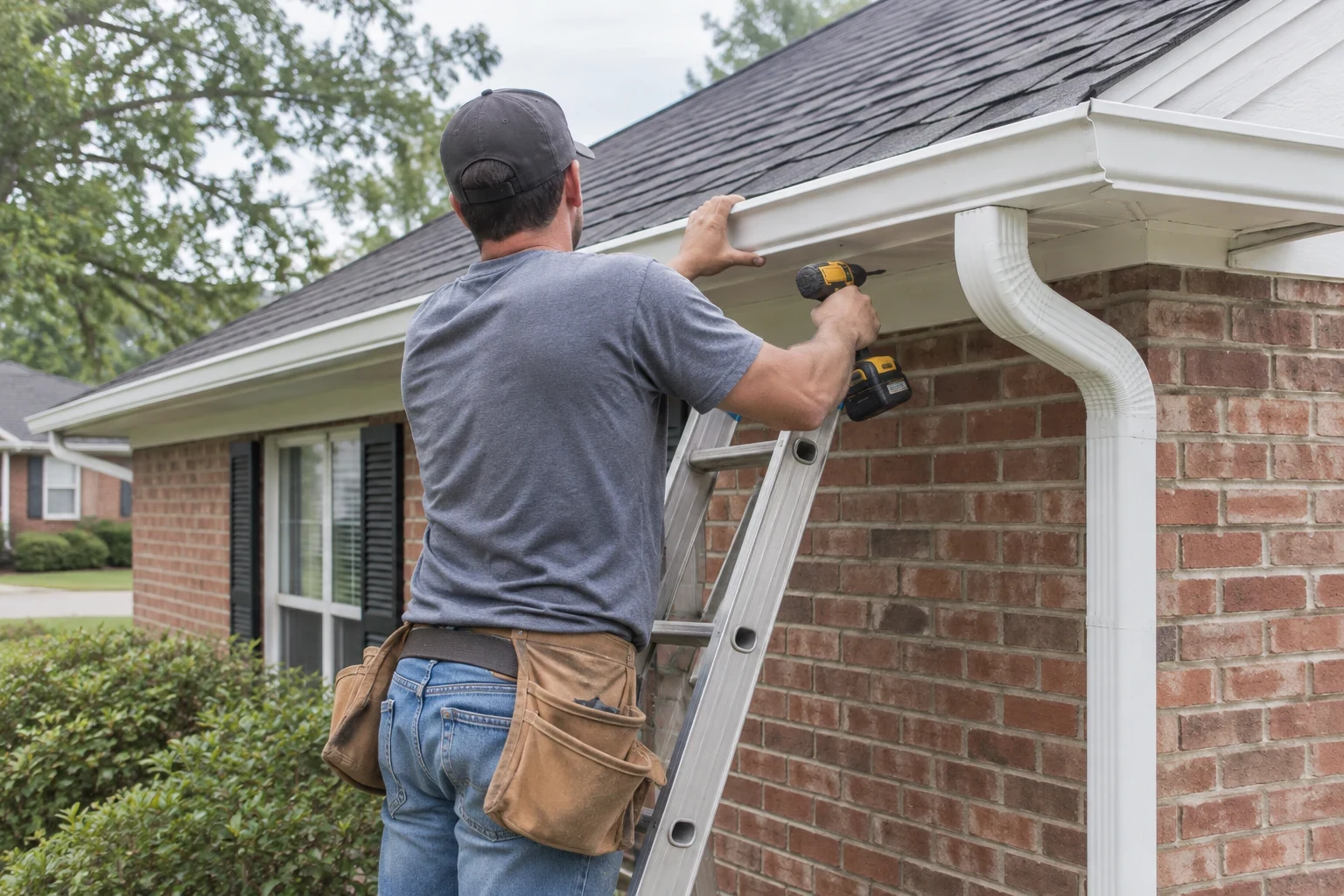
Water spilling over a gutter usually traces back to something small: a hanger that let go, a corner joint whose sealant cracked, or a run that slopes the wrong way. We track down that cause, repair it if the fix will last, and say so directly when a new system is the smarter spend.
What gutters do for the rest of your home
A gutter system has one job: collect the water coming off the roof edge and move it far enough from the house that it never reaches the fascia, the siding or the foundation. When it fails, the damage usually shows up somewhere else first, as rotted fascia boards, peeling trim, a damp crawl space or soil washed out beside the slab.
We treat gutters as part of the roof, because they are attached to it. The drip edge and gutter apron decide whether water lands in the trough or runs behind it, so we check those at the same time. If a sagging section only needs new hidden hangers and a corrected slope, that is what we recommend. If the aluminum is thin, the seams have opened in several places and the fascia behind it is soft, a new one-piece run costs less over time than patching it every spring.
We have been in business 10 years and hold a National General Contractor License (NASCLA), and the crew that repairs roofs is the same crew that handles your gutters.
What our gutter work covers
Rehanging and re-pitching
We swap old spike-and-ferrule fasteners for screw-in hidden hangers set about every two feet. Then we reset the slope to roughly a quarter inch of fall per ten feet so water reaches the outlet instead of standing in the middle of the run.
Seam, miter and end-cap sealing
Leaks at corners and end caps are usually failed sealant, not failed metal. We clean the joint down to bare aluminum and reseal it with gutter-grade sealant so the repair bonds.
One-piece aluminum gutters
When the old system is past saving, we form K-style aluminum gutters on site from coil stock, one piece per run, so the only joints are at corners and outlets. We size them, 5-inch or 6-inch, to the roof area and pitch that drains into them.
Downspouts and discharge
We add or upsize downspouts where one outlet is carrying too much roof, and set extensions or splash blocks so water leaves the foundation zone.
Fascia boards and drip edge
A hanger screwed into soft wood will pull out again within a season or two. We cut out rotted fascia, install sound boards and add or extend drip edge so the roof edge sheds into the trough before any gutter goes back up.
Warning signs at the roof edge
- Overflow during heavy rain
- If water sheets over the lip at one spot in a downpour, look for a clogged outlet, an undersized downspout or a section that has sagged and lost its fall.
- Stains or rot behind the gutter
- Streaks on the fascia or soft wood at the roof edge point to water running behind the trough. That is often a missing gutter apron or drip edge, not the gutter itself.
- Gutters pulling away from the house
- Spikes loosen as the wood around them dries and swells through the seasons. Once a few let go, the weight of wet debris pulls the run down further.
- Drips at corners and joints
- Steady drips at miters and end caps after the rain stops mean the sealant has failed.
- Washed-out soil or a damp crawl space
- Erosion below a downspout or moisture under the house means water is being dumped too close to the foundation. Pine needles and oak debris packed into an outlet are a common cause around here.
How a gutter job runs
- 1
Inspection and photos
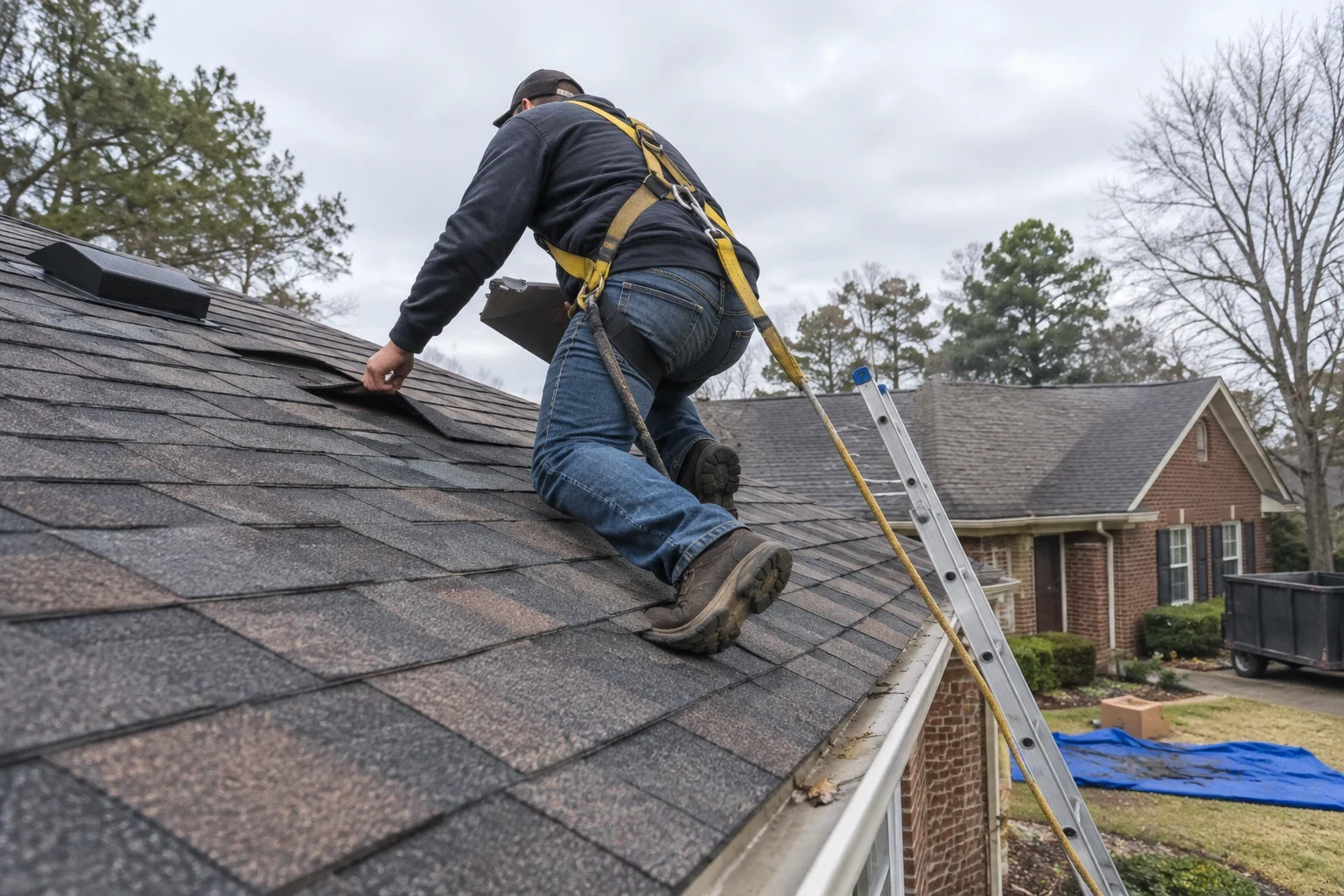
We walk the full perimeter, check every outlet, hanger and seam from a ladder, and look at the roof edge above it. You get a photo report of findings showing what we saw and where.
- 2
An honest repair-or-replace answer
We explain whether rehanging and resealing will hold or whether the system is worn out, and give you a written line-item estimate for the option we recommend.
- 3
The work day
Repairs usually take part of a day. For a replacement, we take down the old gutters, repair any fascia, form the new runs on site, hang them on hidden hangers and connect the downspouts.
- 4
Flow test and haul-off
Once everything is hung, we run a hose at the upper end of every section and follow the water to its outlet to confirm the slope is right. Old metal, spikes and debris leave with us.
What moves the cost of gutter work
Gutter pricing depends mostly on how much of the system needs work and what condition the wood behind it is in. A repair limited to hangers and seams costs far less than a full replacement, which is why we check first. Financing is available through Acorn Finance for larger jobs.
- Linear feet and corners
- Price follows the length of gutter and the number of miters, end caps and outlets the house needs.
- Size and gauge
- 6-inch gutters and heavier aluminum cost more than 5-inch, but they handle a steep or large roof section without overflowing.
- Story height and access
- A two-story eave or a run over a deck or steep slope takes more setup and time than a single-story edge.
- Fascia condition
- Rotted boards and missing drip edge have to be fixed before anything is hung, and we can only see the full extent once the old gutter comes down.
Gutter questions we hear often
- Can my existing gutters be repaired, or do I need new ones?
- If the metal is sound and the problems are loose hangers, lost slope or a few failed joints, repair is usually the right call. Replacement makes more sense when seams are leaking along the length, the aluminum is dented or thin, or the old sectional pieces keep separating. We show you photos so you can see the reason for our recommendation.
- Should I go with 5-inch or 6-inch gutters?
- Five-inch K-style gutters handle most single-story sections. Steep roofs, long runs and valleys that dump concentrated water into one spot often need 6-inch gutters with larger downspouts. We size by the roof area feeding each run, not one size for the whole house.
- Do gutter guards stop clogs completely?
- No guard is maintenance-free. Fine pine needles can still sit on top of many screens and need clearing. We will tell you whether a guard is worth it for the trees around your home or whether a larger outlet and downspout would solve the overflow.
- Will gutter work affect my roof?
- It can, which is why we check both. New gutters should tuck under the drip edge or gutter apron so water cannot run behind them. If the shingle edge or flashing needs attention, we explain it and can handle it as roof repair.
- Can storm-damaged gutters go through insurance?
- Sometimes, when wind or a falling limb caused the damage. We photograph and document what happened, and we offer adjuster meetings and help through the insurance claim process from the first call onward. Coverage is the adjuster's decision, not ours. Our Storm Damage Repair page covers that work in more detail.
Find out what your gutters actually need
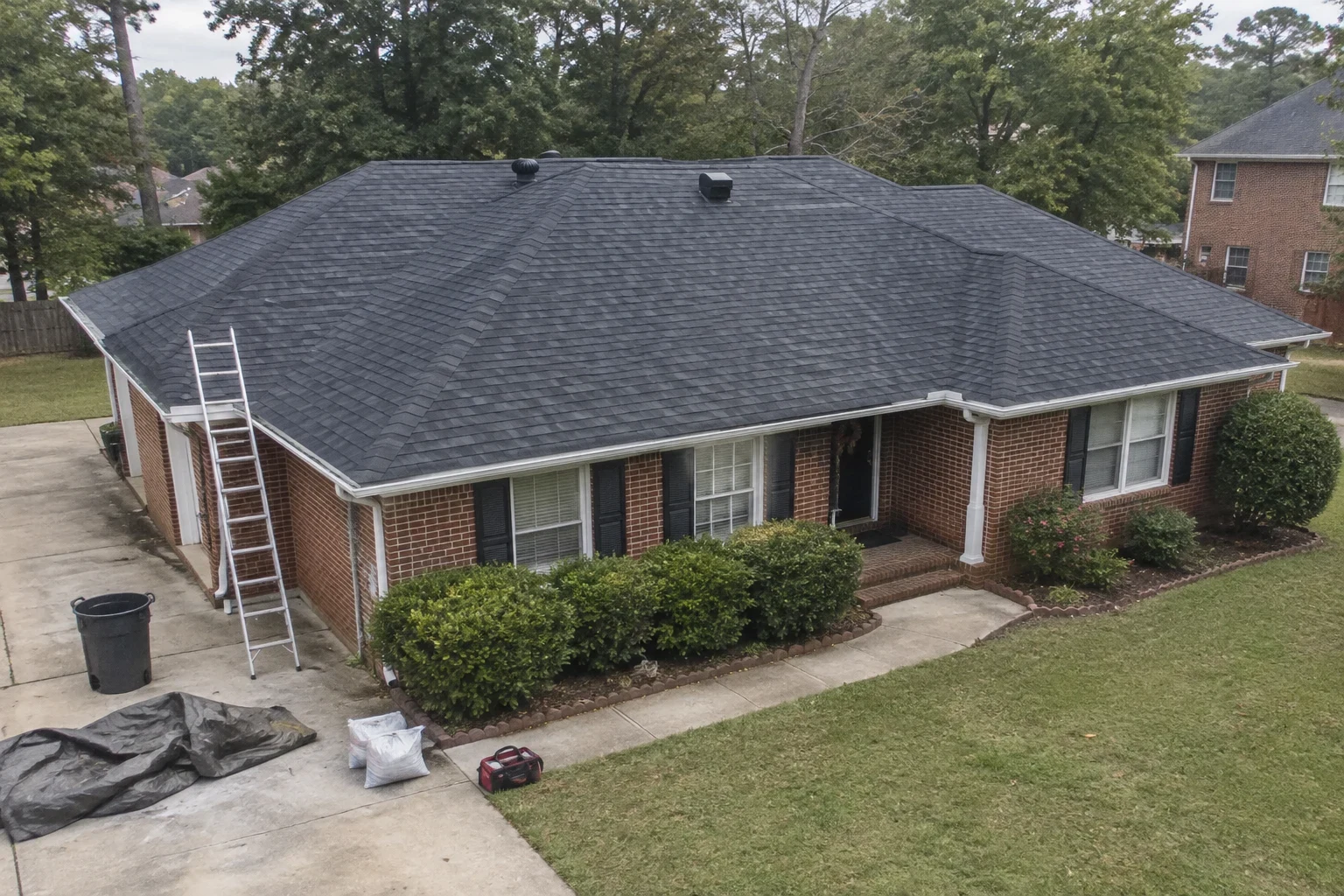
We will check the hangers, seams, slope and roof edge, then show you what we found. If a repair will do the job, that is what we will recommend.