ServicesCommercial Roofing
Commercial Roofing in Rocky Mount
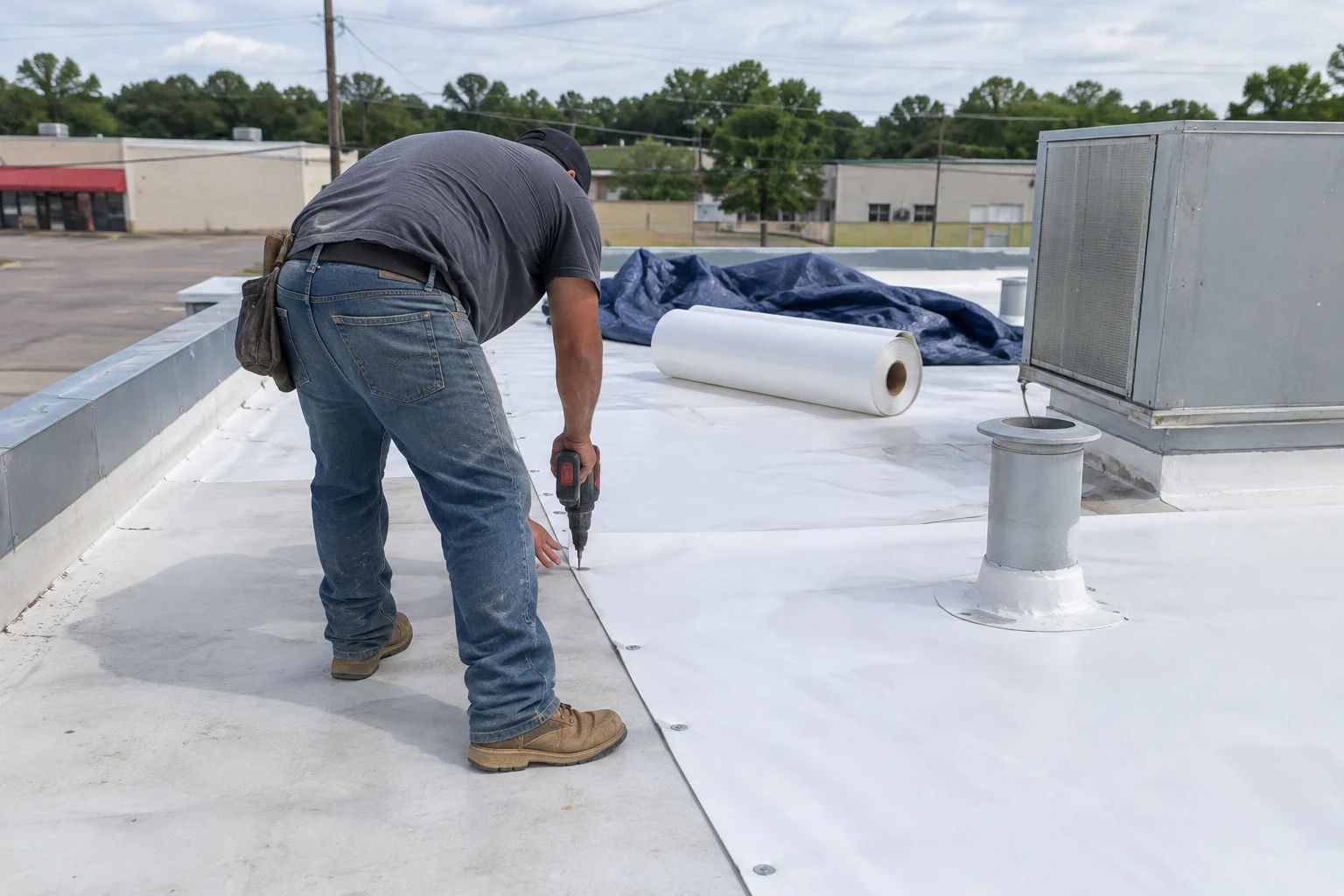
Most leaking low-slope roofs fail at a few points: a lifted seam, a cracked pitch pocket, a parapet flashing that pulled loose. We find those points, document them with photos and repair what can be repaired. When the membrane itself is finished, we tell you why and plan the new roof.
Fixing the roof you have first
We work on existing roofs over offices, retail buildings, churches, warehouses and similar properties. That covers low-slope systems such as TPO, EPDM and modified bitumen, metal panel roofs, and the pitched shingle roofs common on smaller commercial buildings. We do not put up new structures. Our job is the roof already over your head.
A low-slope roof rarely fails everywhere at once. Water usually gets in at transitions: where the membrane turns up a wall, around rooftop units, at drains and scuppers, and at seams that have been heating and cooling for years. Fixing those details often adds real service life for a fraction of what a tear-off costs. We have been in business 10 years, and we recommend replacement only when the membrane is saturated, brittle or failing across the field.
The work is done under our National General Contractor License (NASCLA), and we keep the building open while we work wherever the job allows.
What our commercial roofing work covers
- Leak tracing
- Water on a flat roof runs along the deck before it drips, so the stain inside is rarely under the hole. We trace it back from the interior, then check seams, penetrations and flashings above that area.
- Seam and membrane repair
- On TPO, we scrub the open lap and heat-weld it back together. EPDM seams are prepped with primer and sealed under cured cover tape, and modified bitumen gets a patch of matching cap sheet. Every repair uses a material that bonds with the existing roof.
- Flashing and penetration work
- We rebuild parapet and curb flashings, reseal or rebuild pitch pockets, and fit new boots on pipes and conduit. These are the details that move the most and leak the most.
- Drainage corrections
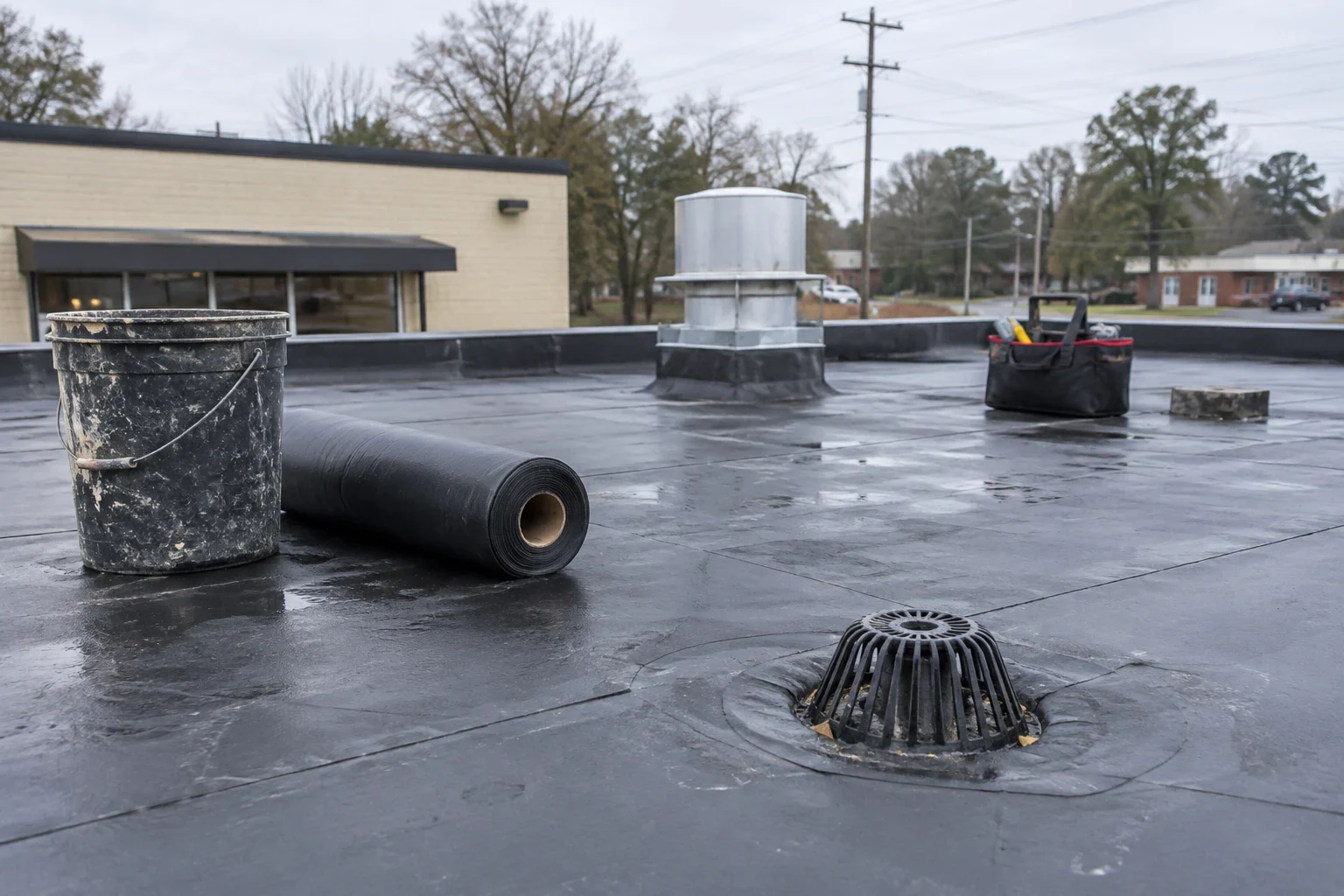
- Clogged drains, undersized scuppers and sagging areas hold water. Standing water speeds membrane aging, so we clear what is blocked and show you where ponding is starting.
- Full re-roof when patching stops paying
- When repair no longer makes sense, we quote a tear-off with new insulation and membrane, or new shingles on a pitched section. Architectural shingle roofs we install carry our 5-year workmanship warranty.
Signs your commercial roof needs attention
Ceiling tile stains
Brown rings on drop ceiling tiles mean water is reaching the deck. A small stain now is a seam repair. Left alone, it can soak the insulation.
Ponding that won't dry out
Water that still sits on the membrane 48 hours after the rain stops points to a clogged drain or a sagging section of deck. The extra weight strains the structure, and the constant wetness wears the membrane out early.
Blisters, wrinkles or shrinkage
Bubbles in modified bitumen or a membrane pulling away from the walls signal trapped moisture or aging. Shrinking EPDM can tear flashings loose at the edges.
Loose metal at the edges
Edge metal and coping caps that rattle or lift in wind let water behind the flashing. Summer thunderstorms will find that gap quickly.
Cracked sealant around rooftop units
HVAC curbs and pipe penetrations depend on sealant and flashing that dry out in the sun. Cracks there are one of the most common leak sources we find.
What drives the cost of commercial roof work
Commercial roofing is priced by the roof, not by a chart. The membrane type, how much of it is still sound and how hard the roof is to reach all change the number. Your written estimate breaks out every line, so the cost of each repair is plain to see.
Repair or tear-off
Resealing seams and rebuilding flashings costs far less than stripping the roof. That is why we check the whole field first.
Wet insulation
Saturated insulation under the membrane has to be cut out and swapped for dry board. Core samples tell us how much before we quote.
Roof size and access
Larger areas, multiple levels and tight access for a lift or material hoist add labor and equipment time.
Rooftop equipment
HVAC curbs, exhaust vents and conduit runs each get flashed individually. The more units sit on the roof, the more hand detailing the job requires, and that labor shows up as its own line on the estimate.
How a commercial roof visit runs
- 1
Scheduled walk-through
We set a time that works around your business hours and look at the interior stains first so we know where to focus on the roof.
- 2
Roof inspection and photos
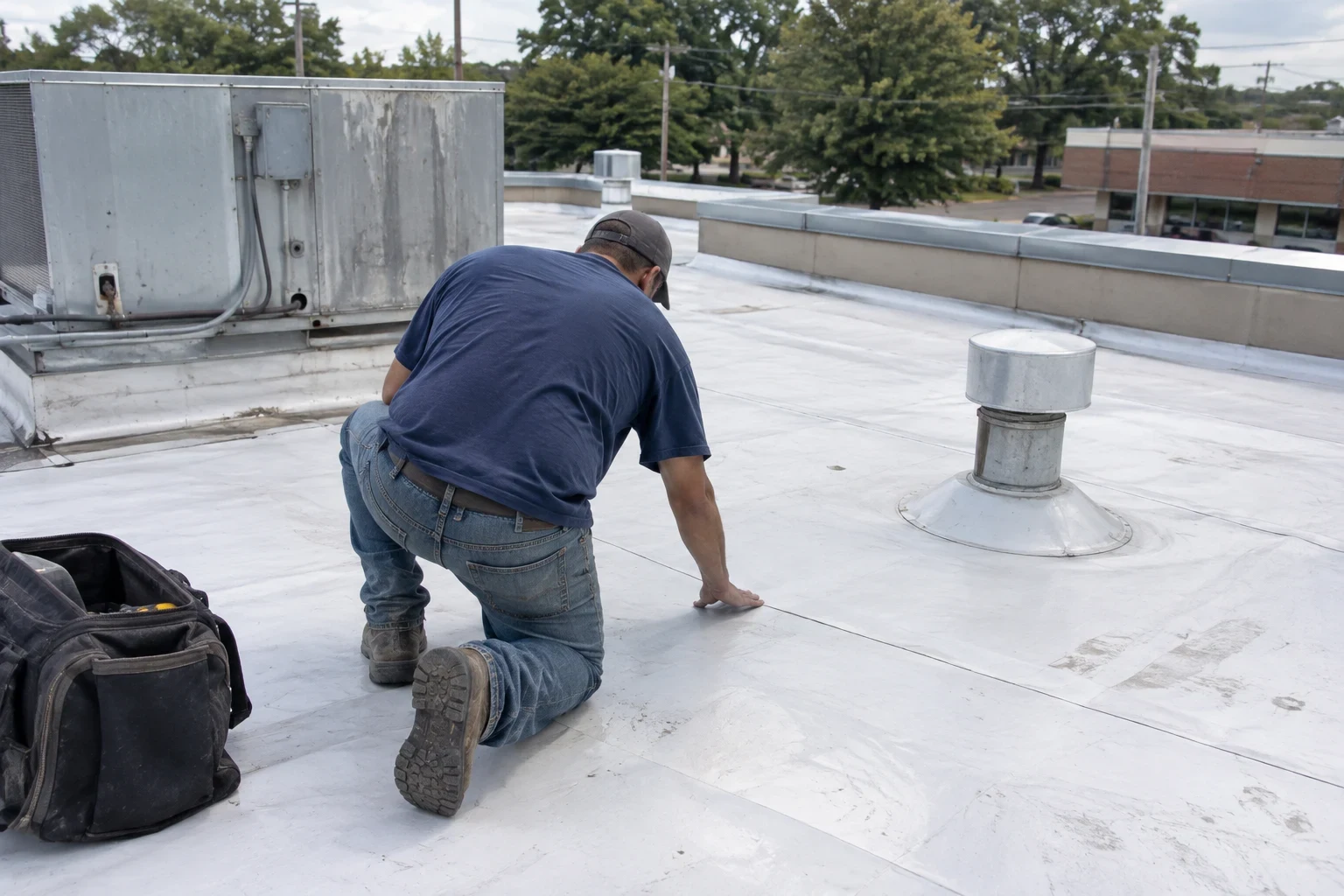
We walk the field, seams, flashings, drains and penetrations, and probe suspect areas for wet insulation. Every problem gets photographed and marked.
- 3
Photo report and recommendation
You get a photo report of what we found with each repair listed. If replacement makes more sense, we show the evidence, such as widespread wet insulation or brittle membrane, so you can judge it yourself.
- 4
Work day and cleanup
Crews stage materials away from entrances, keep debris off walkways and clean the roof and grounds when the day is done. We show you photos of the finished work.
Commercial roofing questions
Can you repair our flat roof instead of replacing it?
Often, yes. If the membrane is still flexible and the insulation underneath is mostly dry, repairing seams, flashings and drains can keep the roof working for years. We confirm that with probing and photos before recommending anything.
Do we have to close while you work?
Usually not. Most of the work happens up top, and we try to time loud tasks and supply drop-offs for hours when your doors are closed or traffic is light. If we need to block an entrance or part of the parking lot, you will hear about it from us in advance.
What roof types do you work on?
We work on TPO, EPDM and modified bitumen low-slope roofs, metal panel roofs, and shingle roofs on pitched commercial buildings. Repairs use materials compatible with the existing system so the patch bonds properly.
Will you help with an insurance claim after storm damage?
Yes. We can be up on the roof when the adjuster inspects it, and we support your claim with our photos and notes. The adjuster makes the coverage decision. Our Storm Damage Repair page explains that process in more detail.
Is there a warranty on commercial work?
Architectural shingle roofs we install come with our 5-year workmanship warranty. For membrane repairs and re-roofs, we explain the coverage that applies to your specific job before work begins.
Get a straight answer on your roof
We walk the field and every flashing, photograph what we find and explain whether patching makes sense or the membrane has reached the end of its life. The inspection costs you nothing.