ServicesRoof Inspections
Roof Inspections in Rocky Mount
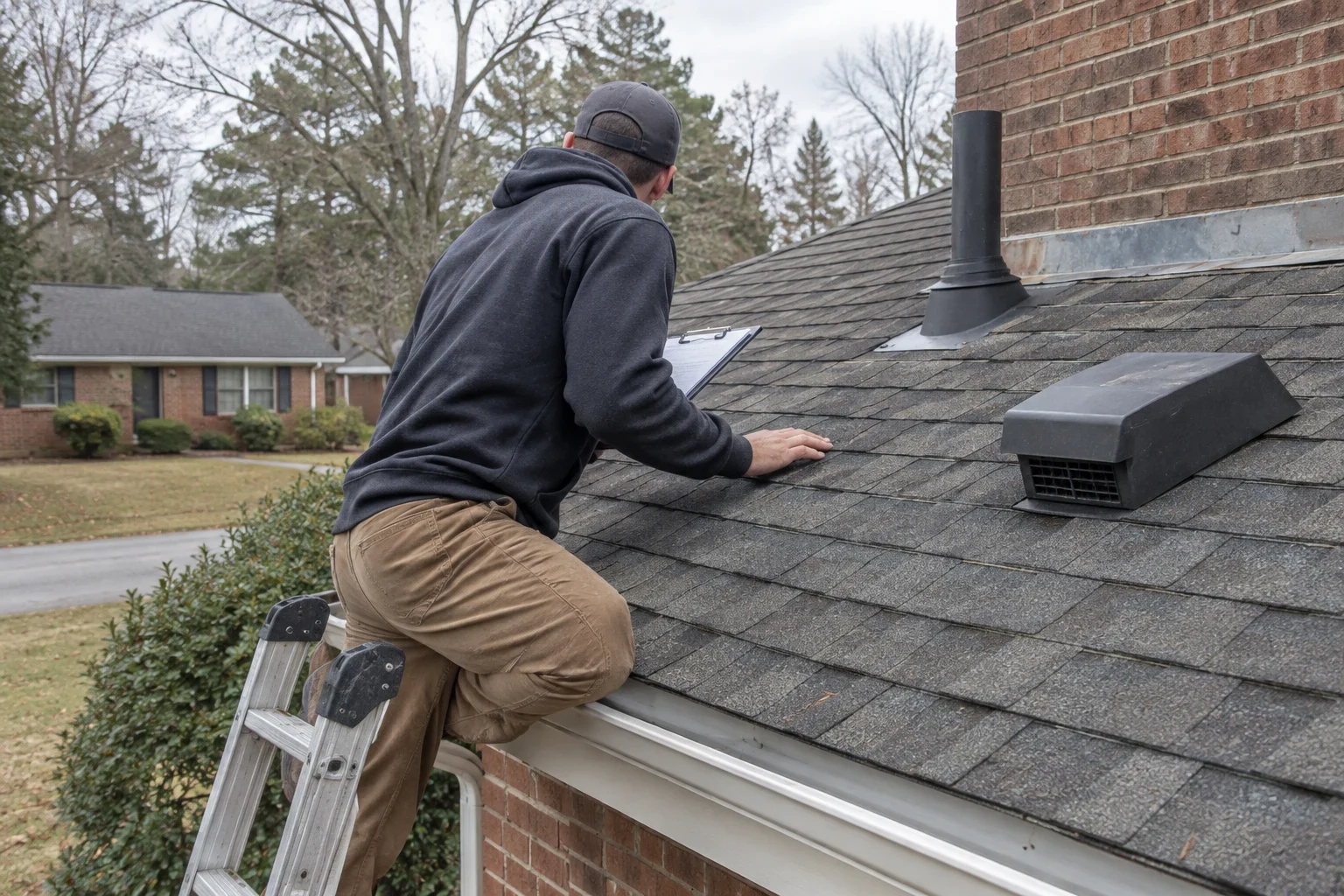
We walk your roof, check the flashing, vents and decking, and look at the attic from underneath. You get a photo report of what we found and a straight answer on whether a repair will carry the roof for years or replacement makes more sense.
What a roof inspection tells you
Roof trouble usually begins in places you cannot see from the driveway. A shingle that has come unsealed, a pipe collar with a split in the rubber, or a fastener working its way up through the deck can feed water into the attic for a long time before any ceiling stain appears. Catching those spots early keeps them in repair territory.
After 10 years in this work, we see the same thing again and again. Shingles give out at edges, valleys and penetrations well before the open field of the roof is worn. That is where we focus, and we take a photo of each problem so you are looking at the evidence, not taking our word for it.
When the roof is in good shape, we say so. When it needs roof repair, we explain the fix and the reason for it. When the shingles are close to worn out, we point to what proves it, such as bare granule patches, cracking tabs or spongy decking, so your decision is based on the roof itself instead of a sales pitch.
What we check on every inspection
- Shingle field and ridge
- We look for missing or creased tabs, blistering, granule loss and cracked ridge caps. An asphalt shingle that has shed its granules is exposed to direct sun, which dries the asphalt and speeds up cracking.
- Flashing and penetrations
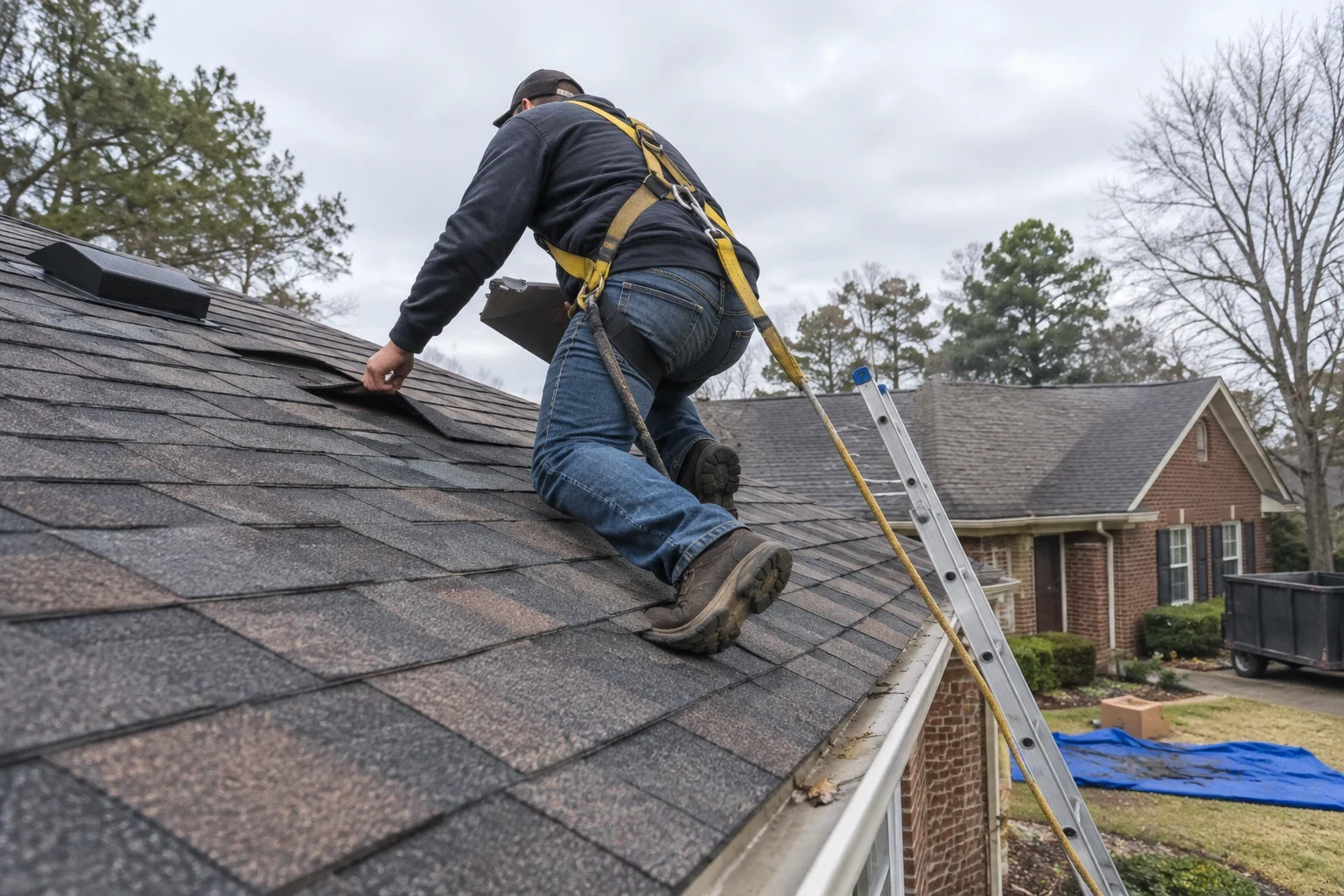
- We check step flashing where the roof meets a wall, counterflashing around the chimney, valley metal and each pipe boot. Rubber vent collars often crack from UV exposure years before the surrounding shingles wear out, and they are a leading source of attic leaks.
- Sheathing from the attic side
- From the attic, we study the bottom face of the plywood or OSB for water stains, mold, light at the seams and dark rings or rust around nail points. Soft or delaminating panels get noted too, because nails cannot grip a weakened deck.
- Ventilation
- We compare intake at the soffits with exhaust at the ridge or box vents. If the balance is off, trapped heat and moisture bake the shingles from below and shorten their life.
- Gutters and drip edge
- Clogged or sagging gutters can push water back behind the drip edge and into the fascia board. We record rot and loose hangers so you can decide whether gutter work belongs on the list.
- Your photo report
- Every issue gets a photo and a note on where it sits on the roof. We review the report with you, and it is yours to keep whatever you decide.
Signs it is time to have your roof inspected
A ceiling stain or attic drip
Leaking water often runs along a rafter or the underside of the deck for several feet before it falls, so the spot on your ceiling can be well away from the actual hole. An inspection follows that path back to where it starts.
Shingles in the yard or gutters
Tabs on the lawn after a windy day, or a thick layer of granules in the gutter, tell you the surface is wearing or the adhesive strips have released.
After a hard storm
Strong thunderstorms and the remnants of tropical systems that reach eastern North Carolina can lift shingles without tearing them loose. Once a tab loses its seal, the next wind-driven rain can get under it. Our storm damage repair page covers what happens if we find that kind of damage.
Buying or selling a house
A documented report on the roof lets you negotiate from facts rather than guesses about how old it is.
The roof is 15 years or older
Plenty of three-tab shingle roofs are near the end of their useful life by then. Checking now gives you time to plan rather than scramble after a leak.
How the inspection goes
- 1
You call and we set a time
During the call we find out the roof's approximate age, any leak history and whether recent weather hit your area. That tells us where to look first.
- 2
Exterior and roof surface
Walkable slopes we inspect on foot. Steep slopes we handle from a ladder at the eaves with close-up photos, which keeps our crew safe and avoids scuffing the shingles. Either way we cover shingles, flashing, vents and gutters and photograph anything that matters.
- 3
Attic check
With your permission, we go up into the attic to look at the decking, insulation and vents from below. A slow leak usually shows up here first.
- 4
Walkthrough of the findings
We go through the photo report with you one item at a time: what we saw, what caused it and how urgent it is. If a repair will handle it, we say so. If replacement is the better use of your money, we explain the reasons and give you a written estimate.
What moves the price of any work we find
You pay nothing for the inspection. The price of a repair or a new roof depends on what turns up during the visit, and our written estimate lists each item separately so every charge is visible before you agree to anything.
- Scope of the problem
- Replacing one cracked pipe boot is a short job with few materials. Cutting out a rotted section of decking and rebuilding the underlayment and shingles above it takes more time and more material.
- Pitch and access
- A steep or tall roof calls for harnesses, roof jacks and slower footwork, so labor goes up compared with a low, walkable slope.
- What sits under the shingles
- Damaged decking or worn-out underlayment is only fully exposed once the shingles are lifted. Our report marks the spots we suspect, so a hidden cost is already on your radar before work starts.
- Patch or new roof
- When wear is spread over most of the roof, a string of repairs can end up costing more than replacement over a few years. We price both options side by side so the comparison is fair.
Roof inspection questions
Something not covered here? (252) 590-5749
Is the inspection really free?
Yes. The visit and the photo report cost you nothing. Hiring us for any work afterward is entirely your choice, and the report stays with you either way.
How long does an inspection take?
A typical single-story house runs about an hour, including the attic and the time we spend going over results with you. Larger or steeper roofs take longer. You do not have to go up on the roof, but someone should be home so we can get into the attic and talk through what we saw.
Will you just tell me I need a new roof?
No. When a roof repair will keep the roof sound for years, that is our recommendation. We only bring up replacement when the photos show wear spread across the roof, such as brittle tabs, bald granule patches or soft decking in several places, and we show you how we got there.
Can the inspection help with an insurance claim?
Labeled photos with dates are strong documentation for a storm claim. If you choose to file, we meet with the adjuster and help you through the claim from start to finish. Whether something is covered is decided by the adjuster, not by us.
What qualifications do you have?
Our company has been in business 10 years, and we hold a National General Contractor License (NASCLA). If an inspection ends with a new architectural shingle roof, that job comes with our 5-year workmanship warranty.
Find out what your roof actually needs
One visit gets you a free inspection, labeled photos of every problem we find and an honest recommendation. Then you decide what to do, on your own schedule.